



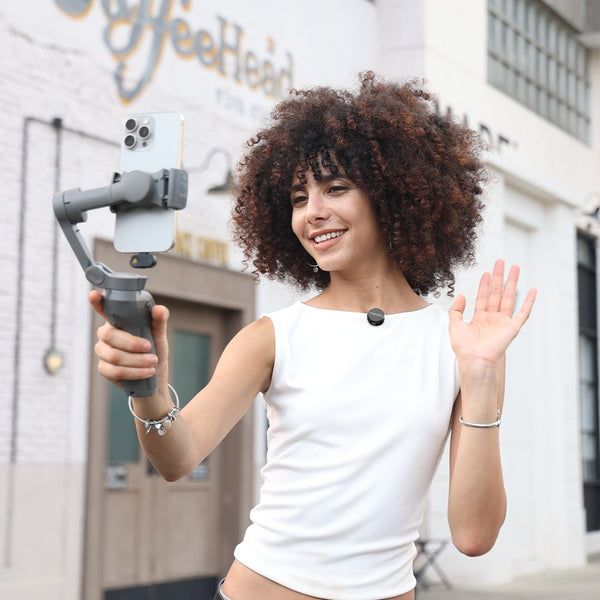
Have you seen college or even high school students filming themselves in the hallways or outside the school while using their smartphones to interview their peers? The background noise could easily be reduced if they used a high-quality, anti-interference wireless microphone.
We recommend the Maono PD200W for students who prefer a medium-build, sturdy microphone with strong anti-interference performance and noise reduction features. We also recommend the Maono Wave T5 and Wave T1 Mini for those who prefer clip-on or lavalier-style wireless microphones.
The modern learning environment demands students to be more involved in multimedia projects, oral presentations, digital submissions, and even social experiments than ever before. Whether they are filming interviews in the school hallway, recording speeches for class, or presenting in front of a crowd, the quality of their audio directly affects how their message is received. This is where choosing the right microphone for podcasting or school use becomes essential.
Two of the most popular choices for students are lavalier wireless microphones and hybrid handheld wireless microphones. Each type offers unique benefits in terms of clarity, convenience, mobility, and cost. In this comprehensive guide, we explore how these microphones perform in everyday school environments and which option best suits different student roles and activities. Many of these setups even resemble a simple microphone setup for podcasting, which helps students become more comfortable with real-world content creation.
Audio Clarity Comparison: Handheld Hybrid Wireless Microphone vs. Lavalier for Student Use
When comparing microphone types for student use, the first and most important factor is audio clarity.
Lavalier microphones are clip-on mics designed to stay close to the speaker’s mouth. This proximity helps them capture clear, focused audio, making them ideal for:
-
Interviews
-
Classroom discussions
-
On-camera presentations
-
Hands-free demonstrations
However, because lavaliers are small, they can sometimes pick up shirt rustling or wind noise if used outdoors without a foam cover.
On the other hand, hybrid handheld wireless microphones provide powerful, clean audio with excellent volume and tonal clarity. Their larger mic capsules allow them to produce richer sound, especially in louder or more dynamic environments. Students can use hybrid handhelds as:
-
Traditional handheld mics
-
Clip-on mic alternatives (when the hybrid includes detachable capsules)
-
Wireless presentation tools
These characteristics are similar to what creators look for when choosing a wireless podcast microphone for professional recording or streaming setups.
What Is a Hybrid Wireless Mic?
A hybrid wireless mic is a microphone that combines the features of both handheld and clip-on microphones. Depending on the model, it may allow students to switch between:
-
Handheld use
-
Wearing it as a transmitter
-
Using different mic attachments
Hybrid mics, like the Maono PD200W, feature triple-mode connectivity, where the user can switch connection whether they prefer USB, XLR, or wireless (2.4GHz) — whatever setup is necessary for their filming or streaming needs. This is similar to using a multifunctional Maono podcasting microphone kit, which offers flexible options for content creation.
This versatility makes hybrid mics incredibly practical for schools with diverse audio needs.
Classroom-Friendliness: Mobility, Comfort, and Hands-Free Use
Lavalier mics excel in situations where students need to move freely—acting out skits, writing on the board, or doing science demonstrations. Since they clip onto clothing, they require no hands and allow uninterrupted movement.
Hybrid handheld wireless mics offer mobility but not hands-free comfort, unless the student switches to a compatible bodypack mode. Still, handheld mics are perfect for:
-
Passing the mic during group presentations
-
Announcements
-
Debates or Q&A sessions (or interviews)
Durability and Build Quality for School Activities
Durability is important because students often handle equipment roughly.
-
Lavalier mics are small and discreet but may be more prone to wire damage if pulled or stepped on.
-
Hybrid handheld mics, especially well-built ones, can withstand falls, daily use, and transportation in backpacks.
Students who need rugged equipment for events or repeated daily use may prefer the sturdier hybrid option. This is the same reason many creators choose durable options when shopping for a cheap podcast microphone that still performs well without easily breaking.
Performance in Noisy School Environments
Schools can be loud. From hallways to gymnasiums, background noise is a major concern.
-
Hybrid handheld mics usually perform better in loud environments because they isolate the speaker’s voice more effectively.
-
Lavalier mics work best in moderately quiet settings, such as classrooms or small outdoor spaces.
If students often record during recess, school events, or in echo-filled rooms, hybrid handheld microphones generally capture clearer audio.
Ease of Use for Younger Students
A major advantage of both mic types is wireless convenience. However, younger students may find:
-
Lavalier mics are easier because they simply clip them on and start recording.
-
Handheld hybrid mics are more intuitive because speaking directly into a handheld mic feels familiar—like in assemblies or performances.
This familiarity is similar to how beginners comfortably use handheld mics when starting their own podcast with a simple microphone setup for podcasting.
Battery Life Comparison
For full-day school use:
-
Lavalier transmitters often have longer battery life due to smaller power consumption.
-
Hybrid handheld transmitters may drain faster at high gain levels or extended range.
Battery life varies by model, but generally, lavaliers last longer on a single charge.
Which Mic Works Best for Recording School Projects or Online Classes?
For video projects or online submissions, lavalier mics produce a clean, natural sound that syncs well with video recording. They are discreet and allow students to move naturally on camera.
Hybrid handheld mics provide more professional, broadcast-like audio, but the handheld form may look bulky in casual recordings.
For online classes—especially when students need to sit and speak—lavaliers offer comfort and convenience.
Budget Considerations: Affordable Options for Students
When selecting microphones for students, schools often prioritize affordability.
-
Lavalier mics tend to be more budget-friendly.
-
Hybrid handheld mics may cost slightly more due to their larger capsules and multi-mode functionality.
Fortunately, brands like Maono offer high-quality, budget-conscious models tailored for students. These models also appeal to beginners looking for a cheap podcast microphone that produces reliable audio.
Microphone Comparison: Maono PD200W, Maono Wave T5, and Maono Wave T1 Mini
Below is a detailed comparison of three ideal school microphone options.
Maono PD200W

Type: Hybrid handheld wireless microphone
Best For: Presentations, school events, noisy locations, podcasts
Pros:
-
Strong anti-interference performance
-
Durable build ideal for school activities
-
Clear, powerful voice pickup
-
Easy to hold and pass around
-
Budget-friendly for the price of approx. $99.99 only
Cons:
-
Not hands-free
-
Slightly larger for younger students
Unique Features:
-
Noise reduction
-
Stable long-range wireless signal
-
Great for school broadcasting or stage use
Maono Wave T5

Type: Lavalier wireless microphone
Best For: Interviews, reports, classroom recordings
Pros:
-
Hands-free operation
-
Lightweight and low-profile
-
Great for smartphone recordings
-
Long battery life
-
Affordable - Costs approx. $99.99
Cons:
-
Small clip may require careful placement
Unique Features:
-
Plug-and-play for phones
-
Excellent clarity for video submissions
Maono Wave T1 Mini

Type: Compact lavalier wireless microphone
Best For: Younger students, vlogging, quick projects
Pros:
-
Extra small and easy to use
-
Very affordable - Approx. $33.99
-
Good clarity for short-range use
Cons:
-
Shorter range than bigger systems
Unique Features:
-
Ultra-compact design
-
Best for on-the-go school recordings
Summary: When to Use a Lavalier vs a Hybrid Handheld Wireless Microphone
Choose a Lavalier Mic When:
-
Students need hands-free movement
-
Recording interviews or video projects
-
Working in quiet or moderately loud environments
-
Budget and portability matter most
Choose a Hybrid Handheld Mic When:
-
Presenting in large rooms or crowded halls
-
Needing a durable microphone
-
Performing announcements or stage activities
-
Handling multiple speakers in one session
-
Wanting a mic they can also use for streaming or microphone setup for podcasting
The Maono PD200W and Maono lavalier options even integrate well with a full Maono podcasting microphone kit, making them versatile for both school and personal content creation.
FAQ Section:
1. Which microphone gives the clearest sound for student presentations?
Hybrid handheld mics usually give the clearest, strongest sound.
2. Is a handheld wireless mic too tiring or bulky for younger students?
It can be, depending on age, but many modern handheld mics are lightweight.
3. Are lavalier mics better for hands-free activities?
Yes. Lavalier mics are ideal for demonstrations, role-plays, and interviews.
4. Is using a wireless microphone allowed in school premises?
Most schools allow wireless mics, especially for projects and presentations.
5. Which microphone works best for recording speeches or projects?
Lavalier mics provide natural sound that pairs well with video recordings.
6. Is a handheld mic more durable than a clip-on lavalier mic?
Yes. Handheld mics generally have more rugged construction.
7. Are hybrid mics better for switching between handheld and clip-on modes?
Yes. Hybrids are designed to offer multi-function versatility.
Conclusion: Student Mic Recommendations
Choosing the right microphone depends on what students need:
-
Choose a lavalier mic for hands-free convenience, smartphone recordings, and video projects.
-
Choose a hybrid handheld mic for presentations, noisy areas, durability, and group use.
-
If students also want to try recording, vlogging, or even podcasting, hybrid systems connect easily to typical microphone setup for podcasting arrangements.
Understanding how each microphone type performs, students and schools can choose the right mic for different activities—for improving audio quality and enhancing the overall learning experience.