

Which Maono Hybrid Microphone Should You Buy?
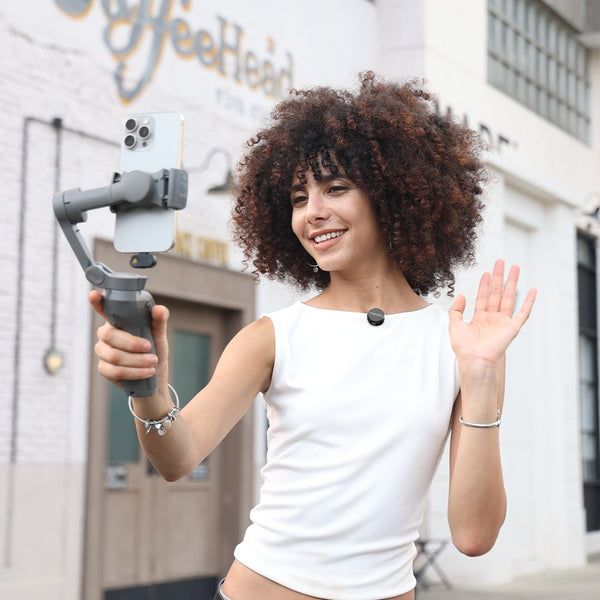
If you're trying to select a desktop microphone but have no clue which one to pick, the Maono hybrid microphone stands out with its wireless freedom, plug-and-play simplicity, and flexible connectivity that adapts to both beginners and growing creators.
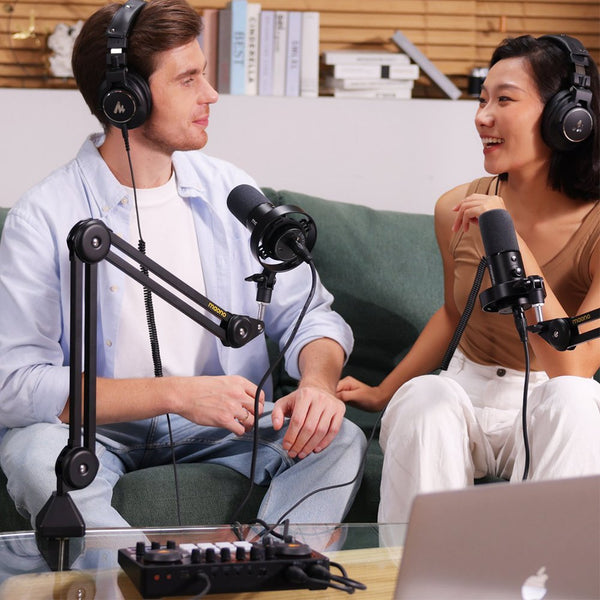
Go for the PD200W if you want a true all-in-one solution — combining USB, wireless, and XLR connectivity, it's built for all podcaster and content creators who need flexibility today and upgrade potential tomorrow.
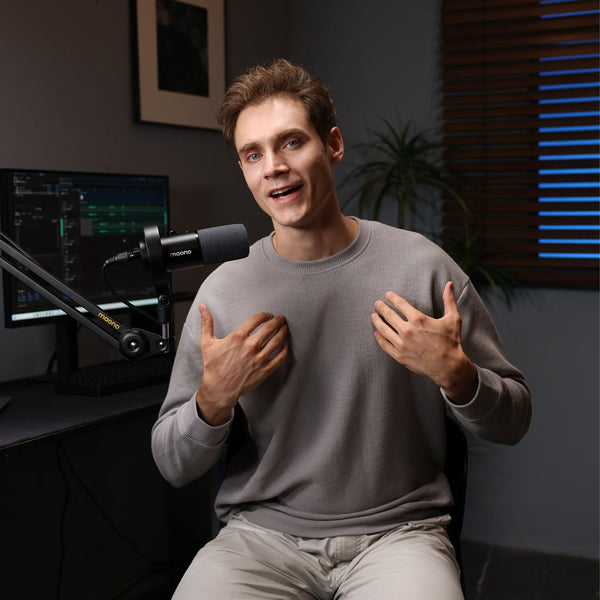
Pick the PD100W if you prefer a clean, simple, and budget-friendly desk setup — with wireless freedom and easy plug-and-play USB, it’s ideal for everyday recording without cable clutter.
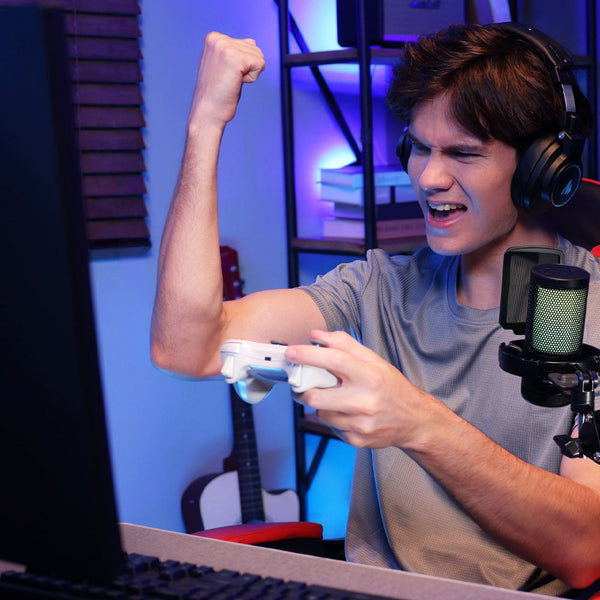
Choose the DM40 if your focus is gaming, streaming, or creative content — deliver condenser-level clarity, RGB aesthetics, and AI voice effects for a more immersive experience.
What is a Hybrid Microphone?
Hybrid Microphone is a plug-and-play mic that combines wireless freedom(2.4GHz) with wired-level professionalism (USB/XLR), so creators can focus on creating—not setting up. It is a future-proof audio solution designed to grow with all creators. By integrating plug-and-play simplicity with professional-grade expansion, it removes the technical barriers between "entry-level" and "going pro."
Why Hybrid Microphones Matter for Different Users
Choosing the right microphone isn't just about specs; it’s about seamless integration into your workflow, enables you more focus on your content creation. Introducing Maono’s hybrid microphone, combine wireless, USB, and even XLR flexibility to solve real-world recording problems across different scenarios.
For podcasters and content creators, the biggest hurdles in audio production are often equipment usability and portability. Common issues like recording interruptions and incompatible audio interfaces can derail your creative workflow. A hybrid microphone allows you to start with simple USB plug-and-play recording, while still giving you the freedom to move wirelessly during shoots or upgrade to XLR as your setup becomes more advanced. This means you won’t outgrow your microphone as your content quality improves, which means less time spent on device configuration but more time on your content creation.
For gamers and live streamers, flexibility and desk setup matter just as much as sound quality. Wireless connectivity completely eliminates the constraints of cables during extended gaming sessions or live broadcasts; meanwhile, a cleaner, minimal setup improves both comfort and on-camera aesthetics. At the same time, USB support ensures instant compatibility with your streaming setup, so you can focus on performance instead of troubleshooting.
For remote professionals and online meetings, reliability and simplicity are important. A hybrid microphone eliminates setup friction with plug-and-play functionality, while also keeping your workspace clean and organized. Whether you're on a quick call or hosting.
PD200W VS PD100W VS DM40: Key Specs at a Glance
The sheet below may help you quickly understand the similarities and differences of the Maono hybrid microphones listed below.
| Microphone | PD200W | PD100W | DM40 |
| Connection Method | Wireless/USB/XLR | Wireless & USB | Wireless & USB |
| Hot Features | World's First Hybrid Microphone | Noise reduction | Voice Changer |
| Transducer Type | Dynamic | Dynamic | Condenser |
| Wireless Connection | √ | √ | √ |
| Battery Life | 60 Hours ( Without RGB) | 40 Hours( Without RGB) | 75 Hours( Without RGB) |
| Voice Changer Function | x | x | √ |
| RGB Lighting | √ | √ | √ |
| Physical Control | 2 In 1 Smart Knob | 2 In 1 Smart Knob | 2 In 1 Smart Knob |
| Audio Performance | Warm, Balanced, Transparent, Low Latency | Crisp, Rich, Low Latency | Crisp,Rich, Low Latency |
| Noise Reduction | √ | √ | √ |
| Device Compatibility | Camera, Phone, Mac, PC, Tablet, Pocket3,Camera. Audio interface, PS4. PS5 | Camera, Phone, Mac, PC, Tablet, Pocket3,PS4. PS5 | Smartphone, PC, Tablet, PS4. PS5, Gaming console |
| Maono Link | √ | √ | √ |
| Material | All-metal + Custom Pop Filter | Polycarbonate | Polycarbonate |
| Real-time Monitoring | √ | √ | √ |
| Headphone Volume Adjustment | √ | √ | √ |
| Gain Adjustment | √ | √ | √ |
| Sample Rate | 48kHz / 24bit | 48kHz / 24bit | 48kHz/24Bit |
| Signal-to-noise ratio | 82dB | 82dB | 80 dB |
| Sound pressure level | 128dB SPL | 125dB SPL | 120dB SPL |
| Frequency response | 50Hz-16kHz | 50Hz-16kHz | 20Hz~20kHz |
| Sensitivity | USB:-4.0dBFS (1 kHz 94 dBSPL 0.5m MAX GAIN) XLR:-53.5dBV(1 kHz 94 dBSPL 0.5m) |
USB:-4.0dBFS (1 kHz 94 dBSPL 0.5m MAX GAIN) | USB:-3.0dBFS (1 kHz 94 dBSPL 0.5m MAX GAIN) |
| Shock Mount | √ | x | √ |
| Pop filter | x | x | √ |
| Extendable Stand (Desktop Version) | √ | x | x |
| Scenarios | Podcasting / Recording / Content creation / Gaming / Online meeting | Gaming / Streaming / Content Creation/ Onlline Meeting | Gaming/ Streaming/ Content Creation |
| Price | Desktop Version: $99.99 Boom Arm Version: $129.99 |
Desktop Version: $59.99 Boom Arm Version: $69.99 |
Desktop Version: $79.99 Boom Arm Version: $89.99 |
Key Differences Between PD200W, PD100W and DM40
If you are looking for a microphone but still unsure which microphone product to pick, here's a clear breakdown comparing them in terms of sound type, connectivity, noise handling, and long-term usability.
Ⅰ.Sound Type : Condenser VS Dynamic
The PD200W and PD100W are both dynamic microphones, while the DM40 is a condenser microphone.
Basically, dynamic microphones offer a richer, warmer tone and are much more forgiving in less-than-ideal spaces. Their lower sensitivity helps them reject background noise, making it the best microphone for podcasting and recording, while condenser microphones like the DM40 capture more detail and clarity, but they are also more sensitive to ambient noise.
Quick Takeaway:
If you are conducting professional recordings in a dedicated studio or a quiet, sound-treated room, we recommend choosing the DM40 condenser microphone.
If you are recording at home—where the environment lacks soundproofing or ambient noise is present during live broadcasts—we recommend choosing either the PD200W or PD100W dynamic microphone.
Ⅱ. Connectivity: USB, Wireless, and XLR Flexibility
As we mentioned before, one of the biggest differences among these three microphones is connectivity. All three microphones support both wireless and USB connectivity; specifically, the PD200W is the only hybrid microphone option features an additional XLR output, which allows you to connect to audio interfaces or mixers for a more professional setup, and the the PD100W and DM40 more focus on a convenient combination of USB and wireless functionality.
Quick takeaway:
If you don't want to buy an extra mic adapted for the audio mixer and enable future upgrade flexibility, the PD200W is the only microphone option.
If you prefer simple plug-and-play use or wireless clean setup, we recommend choosing either the PD100W or DM40.
Ⅲ. Noise Handling: Which Mic Performs Better in Real Environments?
Currently, all three of these microphones support three-level noise reduction adjustment via the Maono Link software. In terms of microphone type, the DM40 condenser microphone—due to its inherently high sensitivity—does not perform quite as well in noisy environments as dynamic microphones, such as the PD200W and PD100W. Regarding noise reduction effectiveness, the PD200W delivers the best results, followed by the PD100W, and finally the DM40.
Quick Takeaway:
If your typical content creation environment is relatively noisy—and you wish to avoid picking up ambient sounds such as keyboard typing or air conditioner hums—we recommend choosing either the PD200W or the PD100W.
If your creative workspace is relatively quiet and you do not have particularly high demands for noise reduction, the capabilities of the DM40 are more than sufficient to support you in producing high-quality content
Ⅳ. Upgrade Potential: Which Mic Grows With You?
If you're looking for the best microphone for podcasting or content creation, your choice should depend on your long-term setup and workflow needs.
The PD200W is a strong option for creators who want a flexible microphone that can grow with their setup. It is especially suitable if you plan to upgrade to an XLR audio interface, record dual-channel audio, or produce interview-style content.
Before making a decision, consider the following:
Will you record two-person podcasts or interviews?
Do you plan to upgrade to a professional XLR setup?
Do you need separate audio tracks for easier editing?
Quick takeaway:
If your answer is yes to any of these, the PD200W is the better long-term investment.
If you prefer a simpler and more budget-friendly setup, the PD100W and DM40 are better suited for beginners.
Which Microphone is Best for Podcasting?
As the world's first three-mode desktop microphone—encompassing wireless, USB, and XLR connectivity options—the PD200W is undoubtedly an excellent choice for podcasters and content creators, excelling in terms of sound quality, device compatibility, and powerful noise-cancellation capabilities.
Which Microphone is Best for Gaming & Streaming?
As one of the first desktop microphones to support real-time voice changing, the DM40 gaming microphone stands out for its condenser-level clarity, making voices sound crisp and detailed in games and streams.
Featuring RGB lighting and built-in voice effects help create a more immersive and visually engaging setup. For gamers and streamers, these features not only enhance the experience but also make content more entertaining for the audience.
For users who care about desk aesthetics, the DM40 offers a clean, modern design that fits well into minimalist or RGB-focused setups without adding clutter.
In short, the DM40 is best for gaming, streaming, and entertainment-focused content where sound clarity, visual appeal, and voice effects all matter.
Which Microphone is Best for Beginners?
From the standpoint of both price and comprehensive functionality, the PD100W is an excellent product for first-time users. Whether it is the convenience of its USB interface or its wireless connectivity, it stands out as a top choice for beginners—without breaking the bank.
Conclusion
We’ve all been there: a brilliant podcast or content idea ruined by background hiss, a high-stakes live stream disrupted by a messy cable, or the frustration of having to buy a brand-new microphone just because you upgraded to a professional XLR mixer. Your gear should grow with you, not hold you back.
The launch of Maono’s Hybrid microphones brings great news to all content creators, whether you are recording your first solo episode or managing a professional broadcast, there is a Maono Hybrid mic designed to turn your "audio headaches" into a seamless creative workflow. Now go pick up your perfect hybrid microphone that will carry your voice to the next level.
FAQs:
Ⅰ. Is PD200W better than PD100W?
Yes, although the cost of the PD200W is slightly higher than that of the entry-level PD100W, considering its all-metal construction, dual-mode functionality (XLR/USB), and long-term creative lifespan, it is undoubtedly a more cost-effective professional-grade productivity tool. If you are dedicated to producing high-quality podcast content, the exceptional sound quality and expandability offered by the PD200W make it the best microphone for podcasting.
Ⅱ. Do I need XLR input for podcasting?
No, You do not actually need an XLR input for podcasting, especially if you're just getting started. A USB microphone for podcasting is often the best choice for beginners because it offers a easy plug-and-play setup solution. This makes it ideal for solo podcasters who want to start recording quickly.
The XLR input is better suited for more advanced setups. It requires an audio interface but provides greater control over sound quality, making it ideal for two-person podcasts, interviews, and professional production.
In shorts:
Choose a USB microphone if you want simplicity and ease of use
Choose an XLR microphone if you need flexibility and plan to upgrade your setup
For most beginners, a USB microphone is the best place to start.
Ⅲ. Can the voice changer function work on smartphones?
No, currently the voice changer function of DM40 can only work on windows only, it can not be work on smartphones.
Ⅳ. Dynamic vs condenser mic: which one is best for podcasting?
Dynamic microphones are the best microphone for podcasting, as their ability to effectively isolate ambient noise, as well as their capacity to deliver vocals with warm, classic "radio" quality. In contrast, condenser microphones are better suited for professionally soundproofed recording environments; while they excel at capturing finer high-frequency details and vocal nuances, they require a 48V phantom power supply to operate.