How to Record Dual Channel Audio Step By Step Guide in 2026
By Cai Joyce
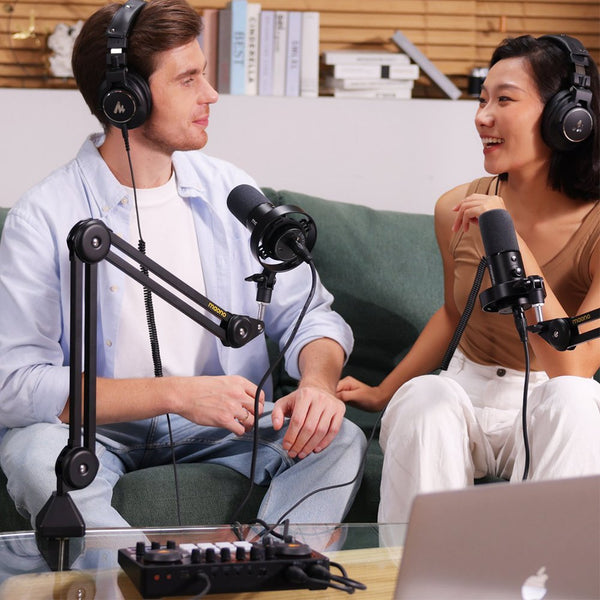
There’s nothing worse than recording two people and finding both voices merged on one track, leaving you with zero flexibility in post-production. This is one of the most common problems when trying to record two microphones at the same time. Once everything is mixed together, it becomes almost impossible to adjust volume levels, remove background noise, or edit each voice separately.
Complex audio editing has become a common challenge for most content creators, especially in scenarios like dual-host podcasts, interviews, and collaborative content. especially for novice users, setting up a two-person recording session entails additional costs in terms of both software learning and operational time.
That’s where the PD200W stands out. With its wirelessdual channel audio recording, each microphone is captured on a separate track, giving you greater flexibility and precise control during post-production—while still ensuring consistently high-quality audio.
In this guide, how to set up a clean dual channel workflow with two PD200W hybrid microphone.
How to Record Dual Audio Channel with Two PD200W Hybrid Microphone
Make sure you have the PD200W microphone first and watch this recommended video tutorial on How to record dual channels with PD200W hybrid microphone via smartphone or camera.
Plug in the USB-C or lightning receiver into your device, you should see 2 blue lights on the receiver flashing
Step3: Connect Both Microphones
Turn on your 2 microphones by long pressing the power buttons on the back of the mics, the blue light around the gain knob should blink blue and turn into solid blue; one of your PD200W microphone should pair automatically with the receiver. but it's possible that the other microphone needs to be paired, you know it needs to be paired if the blue light around the gain knob does not turn solid.
Step4: Enter Pairing Mode and Sync the Microphone with the Type C or Lightning Receiver
Turn the unpaired mic off, and once it's off hold the power button again, the mic will turn back on, but keep holding the power button until the blue light around the gain knob starts blinking rapidly. Now it's in pairing mode and you can let go of the power button.
It should now turn solid blue and pair with the receiver.
Step5: Connecting Both PD200W Microphones to the Maono Link App
Go to your device (smartphone or tablet), and open the Maono link app. Your 2 PD200W microphones should show up in the Maono link app.
Step6: Setting Stereo Mode for Dual-Channel Left and Right Recording
After selecting Start (from the Maono link app), scroll down to the Channel and Mono Stereo switch on the following page. Select Stereo. One microphone's audio will be recorded to the left channel, while the other microphone will be recorded to the right.
PD200W | Activating the 3.5mm Receiver and Switching from Mono to Stereo
Step1:To activate the 3.5mm receiver, long press the power button.
Step2: Make sure both of your microphones are connected to the receiver by following the same procedures.
Step3: Simply flip this switch from M to S to go from mono to stereo.
Step4: The left channel will record from one microphone, while the right channel will record from the other. Each PD200W can then be placed on its own channel in this manner.
Single vs Dual Channel Recording: What’s the Difference?
When recording two people, choosing between a single-channel and a dual-channel setup directly affects your audio quality and editing flexibility. Currently, most users prefer dual-channel recording with two microphones for ease of setup and greater editing flexibility.
The sheet below may help you quickly the differences of single and dual channel recording.
Feature
Single Channel (Basic Setup)
Dual Channel (Recommended Setup)
Microphones Used
Typically uses one microphone
Uses two separate microphones
Track Management
Records all audio into one merged track
Records into two independent audio tracks
Volume Control
No independent volume control for individual speakers
Adjust each voice and volume level independently
Editing Flexibility
Very limited; difficult to fix mistakes or apply EQ to one person
Highly precise; easy to cut mistakes or clean noise for each voice
Noise & Interference
Background noise and "bleed" are harder to isolate
Reduces cross-talk, overlaps, and minimizes background noise
Audio Quality
Lower overall quality; voices may be inconsistent
Professional studio-level sound quality
Best For
Quick, simple setups or solo recordings
Podcasts, interviews, and multi-speaker content
Why Choose Dual Microphone Recordings Instead of One?
Using two microphones dramatically improves recording quality and streamlines your workflow.
When each speaker has their own mic:
Separate Voices stay consistent
Easier Dual-Audio track editing
Volume levels are controlled independently
Background noise is minimized
Which Setup Should You Choose?
Use single channel recording if you need a quick, simple setup
Use dual channel recording if you want clean, professional audio
For podcasts, interviews, and content creation, dual channel recording is the preferred choice.
When Does Dual Channel Recording Matter Most?
Dual channel setups are especially useful when:
Recording interviews or conversations
Producing podcast episodes
Hosting multi-speaker discussions
Creating professional video content
If you plan to scale your content or improve audio quality, switching to a dual microphone setup is a critical upgrade.
Dual Audio Channel Podcast Setup for Interviews
Here’s a simple dual setup:
Option A: USB + USB
Connect Mic 1 via USB to computer
Connect Mic 2 via USB to computer
DAW records each mic as separate input
Option B: USB + XLR
Connect Mic 1 via USB to computer
Connect Mic 2 via XLR into audio interface
Both recorded into separate channels
Option C: XLR + XLR
Both microphones into a 2-input audio interface
Professional studio-level recording
Option D: Wireless + Wireless
The easiest way to start recording today is by using the PD200W’s wireless connectivity. You don't have to spend time to learn complicated software or deal with multiple device connections anymore. Without any external device required, you can record effortlessly while keeping your workspace clean, clutter-free, and distraction-free.
Method 1:
Connect Mic1 to Smartphone via receiver
Connect Mic2 to Smartphone via receiver
Both recorded into separate channels
Method 2:
Connect both of your microphones with a camera to capture the moment via a 3.5mm receiver directly to activate your dual audio recording.
Why PD200W Is the Perfect Microphone For Dual Channel Recording
One of the key benefits of a PD200W wireless microphone setup in multi-microphone recording is reducing cable clutter, easy dual audio channel editing and improving overall sound stability.
In multi-microphone setups, managing multiple cables can quickly become messy. Wires can be accidentally pulled, tangled, or displaced, leading to common issues like background noise, signal dropouts, or unstable audio connections.
This is exactly why PD200W becomes the ideal option for dual channel recording, a stable wireless connection helps eliminate these risks by reducing cable clutter, improving recording stability, and minimizing the chances of equipment damage or safety hazards.
5 Main Points Why PD200W Stands Out.
Start with a simple USB setup-Easy plug & play for beginners
Upgrade to XLR for professional recording - Professional audio interface support
Wireless for mobility- Flexible positioning
Independent editing of two audio tracks—Audio track separation is no longer an editor's nightmare.
Using two dynamic microphones for podcasting gives each speaker their own isolated track. This separation makes editing cleaner and prevents bleed, overlap distortion, and inconsistent volume levels.
Final Thoughts
If you want to record two microphones separately without dealing with complicated setups, moving to a dual channel recording system is the upgrade that makes the biggest difference. It not only solves common issues like mixed audio, uneven volume, and editing limitations, but also gives you the flexibility to create cleaner, more professional content with less effort.
For creators, podcasters, and professionals who need a reliable multi-microphone setup, the PD200W provides a practical solution with wireless freedom, USB ease-of-use, and room to grow with XLR when needed. If you're ready to improve your recording quality and streamline your workflow, this is the upgrade worth making.
FAQs
1. How do I record two microphones sperately?
To record two microphones separately, you need:
Two mic inputs (USB or XLR)
A DAW that supports multi-track recording
Assign each microphone to a separate track
This allows independent editing and better sound control.
2. Can I record dual channel audio with USB via PD200W?
Yes, you can record dual channel audio with USB via PD200W. but:
Your system must support multiple USB inputs
You may need audio routing software
For more stability, XLR setups are recommended.
3 What is the main differences between stereo and dual channel recording?
①Stereo recording: audio split into left/right channels
②Dual channel recording: two independent tracks
Dual channel is better for dual mode recording, audio editing and professional production.
4. Do I need an audio interface for a dual microphone recording?
Not really. It depends on which kind of microphone you have. You don’t always need an audio interface to record two microphones separately — it depends on your setup and experience level.
With USB microphone, you can build a dual channel recording setup without an interface. This is ideal for beginners, podcasters, and creators who want a quick and clean setup without dealing with complex equipment.
if you’re using XLR microphones or want more advanced control over gain, audio routing, and sound quality, an audio interface becomes more important. It allows you to connect multiple microphones and record each channel independently with greater flexibility.
Today, in 2026, a new solution is changing the way creators approach dual microphone recording. With wireless connectivity, microphones like the PD200W make it possible to record two microphones separately without a traditional audio interface.
This means fewer cables, faster setup, and a more stable recording experience — especially for interviews, podcasting, and on-the-go content creation. Instead of focusing on complicated gear connections, you can focus on capturing better content.
5. What is the best microphone type for dual recording?
The best microphone type for dual recording depends on your setup — but for most creators, dynamic microphones are the safer and more reliable choice.
When recording two microphones at the same time, controlling background noise and preventing audio bleeding is critical. Dynamic microphones are designed to focus on the speaker’s voice while reducing surrounding noise, making them ideal for interviews, podcasts, and multi-person recordings.
Condenser microphones can deliver more detailed sound, but they are much more sensitive. In a dual recording setup, this often leads to picking up unwanted noise or even the other speaker’s voice, which makes editing more difficult.
That’s why many creators prefer dynamic microphones for dual channel recording setups — especially in home studios or non-treated environments.