

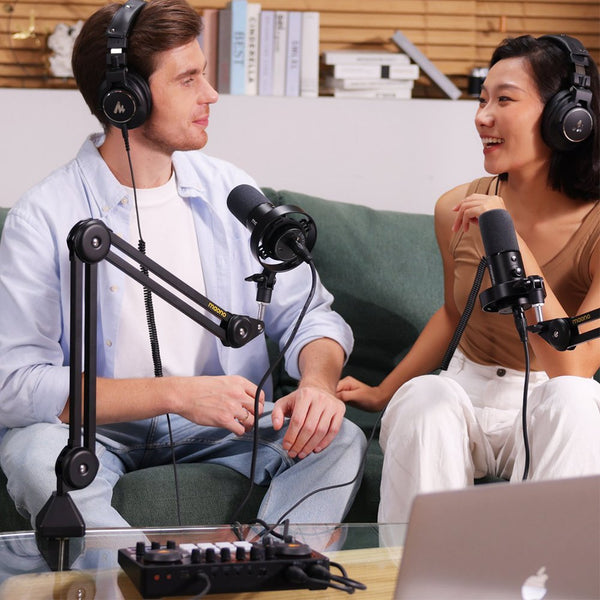
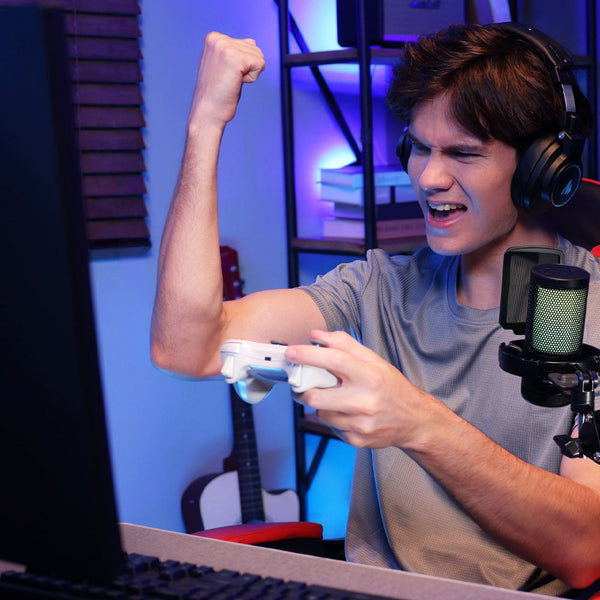
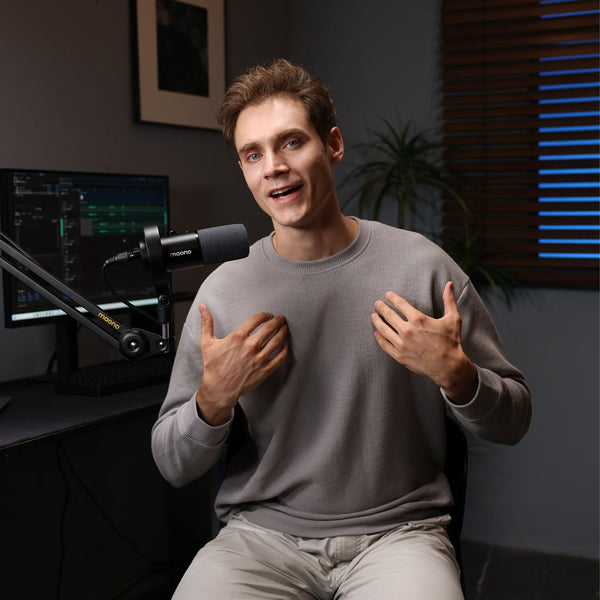
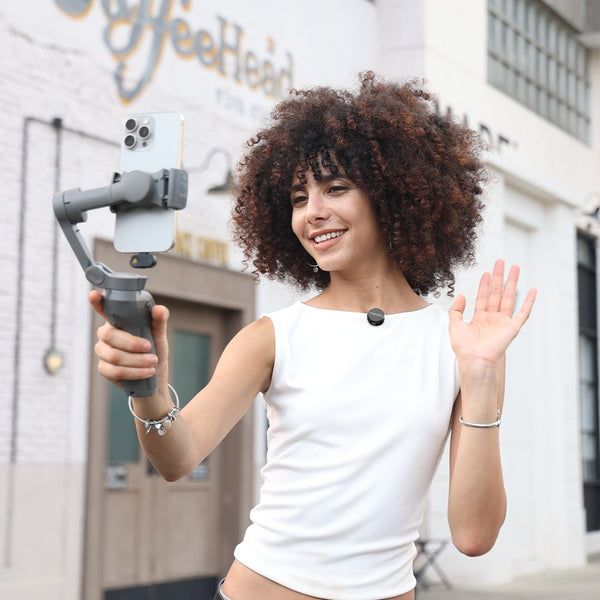
Great content isn’t just about visuals — it’s about how your audience hears you. You might have solid ideas, but if your audio sounds noisy, uneven, or distant, people won’t stay. Most viewers won’t complain — they’ll just leave. Poor sound makes even great content hard to follow and easy to skip. That’s why a reliable external desktop microphone matters. It keeps your voice clean and clear, giving your follower a reason to focus more on your content, as well as streamline your workflow.
Maono microphones are built to solve these everyday issues with simple setup and flexible options like USB, XLR, and wireless — so you can focus on creating, not fixing your audio anymore.
In today’s guide, we deconstruct the core differences within the PD100W / PD200W/ PD200X/ PD300X/ PD400X microphone lineup to help you secure the ultimate productivity tool for your audio.
Which Maono Dynamic Microphone Should you choose?
Choose the PD400X if you are looking for a professional, studio-level microphone with reliable performance, it is ideal for podcasting, recording, and perfect for content creators who care about high-end audio quality and long-term setup scalability.

Pick the PD300X if your focus is podcasting, live streaming, or daily content creation — with balanced sound, built-in DSP noise control, and easy USB & XLR setup, it delivers consistent voice clarity in real-time environments.

Get the PD200X if you’re ready to step up from a basic USB mic — offering both USB and XLR output. it gives you a smooth transition into more advanced audio setups without adding too much complexity.

Go for the PD200W if you require a true all-in-one solution — combining USB, wireless, and XLR connectivity, it's built for all podcaster and content creators who need flexibility today and upgrade potential tomorrow.

Pick the PD100W if you prefer a clean, simple, and budget-friendly desk setup — with wireless freedom and easy plug-and-play USB, it’s ideal pickup for every beginner who just start their desktop setup.

Key Differences Between PD100W vs PD200W vs PD200X vs PD300X vs PD400X
Ⅰ . Connectivity & Setup Complexity
The biggest difference between these microphones lies in how they connect and how easy they are to set up. Some models focus on simplicity, while others are designed for flexibility and long-term upgrade potential.
For beginners, the PD100W is built for ease of use, offering wireless and USB connections that let you start recording instantly without dealing with extra gear, While the PD200W takes it a step further by combining wireless, USB, and XLR connection in one microphone, making it the most flexible and professional audio microphone tool option across different setups. Meanwhile, the PD200X, PD300X, and PD400X focus on USB and XLR connections, giving users a clear upgrade path into more advanced audio setups.
Quick Take:
-
Easy Plug & Play: Wireless+USB → PD100W
-
Want Future Upgrade Potential: Wireless+USB+XLR → PD200W
-
Stable Audio Connection: USB+XLR→ PD200X / PD300X / PD400X
Ⅱ .Sound Profile & Recording Control
Across the lineup, each microphone leans toward a slightly different sound feature. The PD400X stands out with a deeper, more broadcast-style tone, making it well-suited for podcasting or recording. The PD300X, on the other hand, delivers a more balanced and neutral sound, which adapts easily to streaming, meetings, and everyday content creation.
For those just getting started, the PD200X offers a straightforward and reliable sound profile that covers most basic needs. Moving into the wireless hybrid range, the PD200W brings a noticeably richer and warmer tone, while the PD100W leans toward a cleaner, crisper voice presentation—ideal for users who prefer clarity and simplicity in their recordings.
Quick Take:
-
Want broadcast, studio-style voice → PD400X
-
Want balanced and neutral sound → PD300X
-
Want deep and reliable voice-PD200X
-
Want rich and warm sound-PD200W
-
Want clean and crisp audio → PD100W
Ⅲ. Noise Control Performance in the Real Environment
In real-world setups, background noise is often a bigger issue than sound quality itself. Keyboard clicks, room echo, or ambient noise can easily affect your recordings if your microphone isn’t designed to handle it.
All of these microphones benefit from the natural noise-rejection of dynamic mics, helping them focus more on your voice and less on your surroundings. However, their performance still varies depending on the model and features.
The PD400X offers strong natural noise rejection, especially when used in controlled setups. The PD300X stands out in untreated environments thanks to its DSP support, which helps stabilize your voice and reduce background distractions in real time.
For more flexibility, the PD200X, PD200W, and PD100W give you direct control over noise reduction. With Maono Link software, you can switch between three levels of noise filtering like slight, moderate and aggreesive, so you can adapt your setup whether you're recording in a quiet room or a noisy space.
Quick Take:
-
Noisy or untreated room → PD300X (DSP support)
-
Controlled setup, best raw sound → PD400X
-
Need adjustable noise reduction → PD200X/PD200W / PD100W (with Maono Link)

Ⅳ.Flexibility & Mobility
Not all recording setups are fixed. Some creators need to switch devices, move between locations, or record them in different environments. This is where flexibility becomes a major factor. The PD200W and PD100W stand out because of their wireless capabilities, making them ideal for mobile recording, interviews, or multi-device setups. In contrast, the PD200X, PD300X, and PD400X are better suited for stable desktop environments where consistency matters more than portability.
Quick Take:
-
Need mobility & multi-device use → PD200W
-
Want simple wireless setup → PD100W
-
Fixed desk setup → PD200X / PD300X / PD400X
Ⅴ.Upgrade Potential
Choosing a right microphone isn’t just about your current setup — it’s also about how your requirements might evolve over time. Some microphones are designed to grow with yourself, while others are better for simple, short-term use.
The PD400X offers the strongest long-term value, making it the best choice for users building a professional studio setup with XLR.
If you prefer to start simple but keep the option to upgrade later, the PD300X and PD200X provide a more balanced and flexible path for users who want to start simple and upgrade later.
For creators who need maximum versatility, the PD200W stands out with its hybrid design, supporting wireless, USB, and XLR connections across different setups.
The PD100W is actually designed for simplicity — ideal for beginners who want an easy, straightforward recording solution without worrying about future upgrades.
Quick Take:
-
Long-term studio setup → PD400X
-
Balanced upgrade path → PD300X / PD200X
-
Flexible use across setups → PD200W
-
Simple, no-upgrade needed → PD100W
Ⅵ. Price & Budget Consideration
Smart audio investment starts with a clear budget. By identifying your must-have features within a set price range, you can avoid the pitfalls of both underperforming gear and unnecessary high-end costs. Aim for the best value, not just the best price.
Quick Take:
FAQs
Ⅰ.Which Microphone is Best For Podcasting & Content Creation?
For podcasting and content creators, sound quality matters the most. If your voice sounds thin, picks up too much background noise, or varies from one recording to the next, it can make your content feel less professional.
Deliver a more solid, broadcast-style voice, adding depth and presence that helps your recordings sound more professional right away. The PD400X does better job of isolating your voice from background noise, so your audio stays clean and consistent even in less controlled environments.
With both USB and XLR support, it adapts to your workflow as you grow — from a simple desktop setup to a more advanced studio environment, without the need to upgrade your microphone.
- If you want your content to sound more polished and reliable, the PD400X is a strong long-term choice.

Ⅱ.Which Microphone is Best For Game Streaming?
For game streamers, your audio should sound clear and consistent in real time. Background noise from your keyboard, fan, or room can easily distract viewers, and there’s usually no chance to fix it later.
Delivers a balanced, natural voice and uses built-in DSP to help reduce unwanted noise, The PD300X is designed for this kind of setup so your stream sounds clean without extra tweaking. With its plug-and-play USB connection, it’s also quick to set up and easy to use.
-If you want reliable, clean audio for game streaming without a complicated setup, the PD300X is a solid choice.

Ⅲ.Which Microphone is Best For Interviews & Dual Channel Recording?
Recording interviews or two-person content can be tricky. It’s easy to run into issues like uneven volume, overlapping voices, or messy cable setups — especially when you’re working with multiple microphones.
The PD200W makes this much easier with its flexible design. It supports wireless, USB, and XLR connections, so you can set up quickly and record more freely without being limited by cables. Each voice can be captured more clearly, which also makes editing and balancing much simpler afterward.
-If you want a cleaner, more flexible setup for interviews or dual recording, the PD200W is a absolutely your reliable choice.

Ⅳ. Which Microphone is Best For Voice-Over & Studio Recording?
Voice-over and studio recording often require cleaner, more controlled audio. Many users find their recordings lack detail, sound slightly noisy, or become harder to adjust during editing.
After spending time with the PD200X in voice-over and light studio setups, it feels like a natural step up from basic USB microphones.vOne thing that stands out is how it improves control without complex setup. The USB and XLR options make it easier to transition into a more advanced setup over time, while still keeping things simple when needed.
In actual recordings, the voice comes through more focused and slightly more defined, which helps when making adjustments in post-production.
-If you’re looking for a straightforward upgrade that moves you closer to a studio workflow, the PD200X feels like a well-balanced option.

Ⅴ. Which Microphone is Best For Beginners?
Getting started with audio can feel overwhelming. Many beginners struggle with complicated setups, too many cables, or not knowing which settings actually matter.
After using the PD100W, what stands out is how quickly you can get everything up and running. You can start recording in minutes with either wireless or USB connection, without needing to deal with extra equipment. It still delivers clear, reliable sound, making it a great choice for everyday use — whether you're recording, streaming, or joining online meetings.
-If you want something easy to use without a steep learning curve, the PD100W is a smart place to start.
PD100W vs PD200W vs PD200X vs PD300X vs PD400X : Key Specs at a Glance
Conclusion
The best microphone isn’t the one with the most features — it’s the one that fits your workflow and helps you create more consistently. If you already know your setup and goals, choosing the right microphone becomes much easier — and once your audio improves, everything else in your content follows.