

Some content creators prefer handheld wireless microphone options, especially when they have a dual interview setup—like those used for podcasts. However, with so many options available online, you want to narrow down your choices to the best podcast microphone.
So, what makes the best podcasting microphone? Easy. It should have unique features that no other wireless microphone offers.
With the Maono PD200W, you get notable, specialized features such as compatibility with phones, computers, and cameras; podcast-level sound quality; wireless and triple-mode transmission; a built-in sound card; AI noise reduction; and anti-interference performance.
Let’s find out what these features offer content creators.
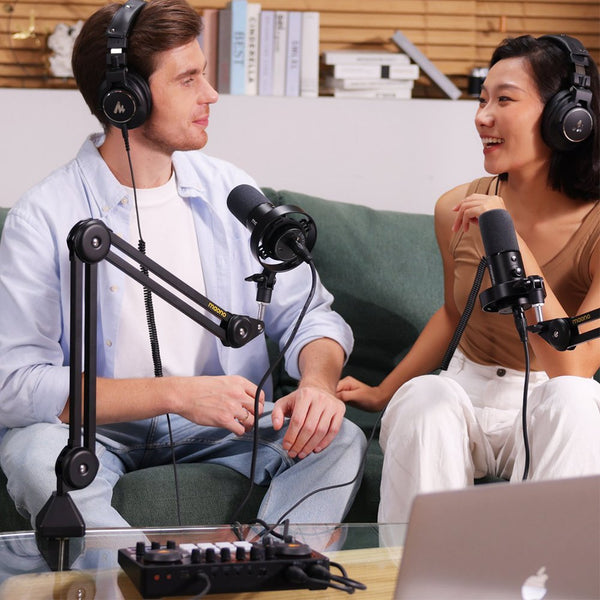
Podcasting has grown into one of the most engaging ways to share ideas, stories, and expertise. Whether you're interviewing guests, hosting a co-hosted commentary show, or launching a brand-new conversational program, a dual podcast setup is essential for delivering clear, professional dialogue. But getting great audio from two hosts isn’t as simple as placing two microphones on a table. You need the right setup, the right techniques, and the right gear—especially if you want studio-quality results without spending a fortune.
This guide walks you through how to create a polished two-host podcast setup on a budget, how to avoid common audio issues like echo and crosstalk, and how to position microphones effectively. Along the way, we’ll explore why many creators rely on the Maono PD200W, a wireless microphone system packed with features ideal for modern podcasting. Whether you're upgrading or building your setup from scratch, this comprehensive guide will help you achieve clean, consistent, professional audio.

How to Build a Professional Dual Podcast Setup on a Budget
A pro-level dual podcast setup doesn’t have to drain your wallet. With smart gear choices and a clear recording workflow, you can achieve crisp, balanced audio for two speakers at a reasonable cost.
Here’s what you need:
1. Two Dynamic Microphones
Dynamic mics are better for podcasting than condensers because they reject background noise and focus on the speaker’s voice. For a dual setup, using two identical microphones helps achieve consistent tone between hosts. Having the right microphone for podcast workflows is essential for achieving the best results.
2. Sturdy Boom Arms or Desktop Stands
Proper mic positioning is key. Boom arms offer flexibility and keep hands free.
3. A Two-Input Audio Interface (if using XLR)
Budget options like the Maono E2, Focusrite 2i2, or Maono’s dual wireless system (such as the PD200W) allow simultaneous recording of two audio channels.
4. Closed-Back Headphones
Monitoring helps hosts hear themselves and each other, reducing mistakes and improving pacing.
5. Basic Acoustic Treatment
Foam panels, carpets, curtains, and bookshelves can make a massive difference. You don’t need a treated studio—just enough soft surfaces to prevent reflections.
6. Recording Software
Free options like Audacity and GarageBand can handle two-track recording. More advanced tools like Adobe Audition or Reaper give you pro-level editing capabilities.
With these essentials, you can create a dual podcast setup that sounds clean, full, and professional—without going over your budget.
How to Avoid Echo and Crosstalk in a Two-Mic Podcast Setup
Dual setups often suffer from two common issues: echo and crosstalk (when one mic picks up the other speaker). Here’s how to prevent them.
1. Use Dynamic Microphones
Dynamic mics have tighter pickup patterns, reducing unwanted room noise—a must when choosing the best microphone for podcasting.
2. Place Microphones 6–8 Inches from Each Host
Close mic’ing improves clarity and lowers room reflections.
3. Use Cardioid Pickup Patterns
Cardioid mics focus on the voice in front and reject sounds from behind and the sides—ideal for podcasts and essential when choosing a reliable podcasting microphone.
4. Angle Microphones Away from Each Other
A 120° angle helps reduce bleed between hosts.
5. Add Soft Surfaces Around the Recording Area
Even small adjustments—placing pillows behind microphones or adding curtains—can reduce echo significantly.
6. Use Noise Reduction Tools
Modern microphones like the Maono PD200W include AI noise reduction to help eliminate ambient sounds in real time.
Best Microphone Placement Techniques for Dual Hosts
Proper mic placement is the backbone of clean dual-host podcast audio. Here are the best techniques:
1. The Close-Fire Technique
Each host speaks directly into the mic at a 15–30° angle. This reduces plosives and keeps breathing noise minimal.
2. The X-Position Technique
Both mics are angled slightly inward but not pointed directly at each other. This helps maintain clear separation between speakers.
3. Same Height, Same Distance
For consistent audio quality, both microphones should be positioned at the same height and distance relative to each host.
4. Avoid Table Vibrations
If the mics are on stands, avoid tapping or bumping the table. Use shock mounts when possible.
5. Use Pop Filters
These reduce harsh “P” and “B” sounds. They’re inexpensive but make a noticeable difference.
What Are Some Interesting Topics to Discuss for a Dual Podcast Setup?
A dual podcast setup opens the door to exciting two-person conversations. Popular formats and topics include:
-
Trending news and commentary
-
Technology reviews and creator tools
-
Lifestyle and productivity discussions
-
Entertainment, movies, and pop culture
-
Behind-the-scenes content creation stories
-
Guest interviews or expert Q&A
-
Personal development, career growth, or finance tips
Creators searching for concepts often look for “Create a Pro Dual Podcast Setup: Tips + Maono PD200W Guide” style content, proving the popularity of educational, tech-focused podcast episodes.
What Are the Unique Features of Maono PD200W That Make It Perfect for a Podcast Setup?
The Maono PD200W stands out as one of the most versatile and creator-friendly wireless microphone systems on the market. Here are its top features that make it ideal for podcasting and choosing the best podcast microphone for your workflow:
1. Compatibility with Phones, Computers, and Cameras
Whether you're recording into a smartphone, laptop, or DSLR camera, the PD200W works seamlessly. This is especially valuable for podcasters who shoot video episodes or simultaneously stream to multiple platforms.
2. Podcast-Level Sound Quality
Its dynamic microphone design provides warm, crisp, broadcast-style audio, perfect for conversational podcasts and essential when selecting a high-quality podcast microphone.
3. Wireless & Triple-Mode Transmission
You can transmit audio in multiple ways—wired, wireless, or low-latency digital. This flexibility allows you to adapt to different recording environments.
4. Built-In Sound Card
With onboard audio processing, podcasters gain access to effects, EQ, and improved tone shaping without additional gear.
5. AI Noise Reduction
This smart feature targets keyboard clicks, fans, chatter, and ambient noise—ideal for interviews recorded outside studios.
6. Anti-Interference Performance
Stable signal transmission ensures uninterrupted audio even in crowded environments like cafés, co-working spaces, or event venues.
These features make the PD200W an excellent choice for anyone needing a reliable microphone for podcast production.
Recommended video:
What Makes the Maono PD200W Ideal for Dual Podcasting Setups?
The PD200W is specifically designed for multi-host environments. Its dual-microphone setup and reliable wireless operation make it a strong contender for anyone searching for the best podcast microphone that can handle two-person recordings with ease.
How Does the PD200W’s Multi-Noise Reduction Help in Two-Host Recordings?
Dual recordings often amplify background noise because two microphones are active. The PD200W’s AI-powered noise reduction helps maintain clarity across both voices, making it a standout podcasting microphone for creators working in non-studio spaces.
Can I Use Two PD200W Microphones Simultaneously on One Laptop?
Yes. The Maono PD200W is designed to allow dual-mic operation. When paired with the included receiver or multiple wireless units, you can record two separate channels directly into your laptop or smartphone. This setup is perfect for two-host podcasts, interview shows, or guest-based recordings. Simply plug in the receiver, choose your digital audio workstation (DAW), and start recording.
Conclusion
Creating a professional dual podcast setup doesn’t have to be complicated or costly. With proper mic placement, the right gear, and thoughtful recording techniques, you can produce polished, engaging two-host content. The Maono PD200W stands out thanks to its compatibility, strong noise reduction, wireless flexibility, and reliable performance. It delivers everything podcasters need in a podcast microphone, whether you are just starting or refining your setup for better results.
Whether you're just starting out or upgrading your setup, the PD200W offers everything you need for a clean, polished, and flexible dual podcast recording experience. With thoughtful planning, effective techniques, and smart gear choices, you’ll be well on your way to building a professional, listener-ready podcast. Get your PD200W quick for less than the price in Maono!