

Quick Take
Choose the Maono PD500W if you need a hybrid microphone for video, mobile, camera, wireless, and internal recording workflows. It is made for creators who move between a desk, a camera, a phone, and field recording.
Choose the Maono PD500X if you record mainly at a desk and want USB/XLR recording, a built-in preamp, and a cleaner desktop chain for livestreaming, voiceover, vocals, DAW work, or fixed podcast setups.
PD500W is built for creators who need professional voice quality outside a fixed desk setup, with more freedom for camera work, mobile interviews, wireless recording, and internal backup while PD500X is built for desk-based creators who want strong dynamic vocal sound with fewer external devices in the recording chain.

PD500W vs PD500X at a glance
|
Specifications |
PD500W |
PD500X |
|
Main Feature |
XLR+USB+2.4GHz Wireless+Internal Recording |
XLR+USB+Built-in Preamp |
|
High-Quality Dynamic Capsule |
30mm |
30mm |
|
Cardioid Pattern |
✔ |
✔ |
|
2.4GHz Wireless Transmission |
✔ |
❌ |
|
USB-C Outputs |
✔ |
✔ |
|
XLR Outputs |
✔ |
✔ |
|
Internal Recording |
✔ |
❌ |
|
48 kHz / 24-bit Sampling Rate |
✔ |
✔ |
|
192 kHz / 24-bit High-Resolution Sampling Rate |
❌ |
✔ |
|
Sensitivity |
XLR:-55 dBV/Pa @ 1 kHz, 94 dB SPL / USB:-1 dBFS @ 1 kHz, 89 dB SPL, Max Gain, Original Mode |
XLR:-55 dBV/Pa @ 1 kHz, 94 dB SPL / USB:-1 dBFS @ 1 kHz, 89 dB SPL, Max Gain, Original Mode |
|
Maximum Sound Pressure Level (Max SPL) |
XLR:147 dB SPL @ 1 kHz / USB:128 dB SPL @ 1 kHz |
XLR:147 dB SPL @ 1 kHz / USB:128 dB SPL @ 1 kHz |
|
Signal-to-Noise Ratio (SNR) |
70 dB(A) / 2.4GHz Wireless Mode / USB Mode, Original Sound, Min Gain, 1 kHz at 94 dB SPL |
70 dB(A) / USB Mode, Original Sound, Min Gain, 1 kHz at 94 dB SPL |
|
Built-In Preamp / (with Up to +30 dB of Gain) |
❌ |
✔(20 dB/30dB/bypass) |
|
Sound EQ Presets |
4 Modes & Customize |
4 Modes & Customize |
|
10-Band / Parametric EQ |
✔ |
✔ |
|
AGC / (Adaptive Gain Control) |
✔ |
✔ |
|
Built-in / Compressor |
✔ |
✔ |
|
Built-in / Limiter |
✔ |
✔ |
|
Reverb Effects |
❌ |
✔ |
|
3-Level & Custom / AI Noise Reduction |
✔(3 Modes & Customize) |
✔ |
|
Smart De-Popper & Limiters |
✔ |
✔ |
|
3.5mm monitor output |
✔ |
✔ |
|
Dual-Transmitter, Single-Receiver System / (2-TX + 1RX) |
✔(Wireless) |
❌ |
|
Dual-Channel Recording |
✔(Wireless) |
❌ |
|
Safety Channel |
✔(-9dB) |
❌ |
|
Timecode / (Camera Receiver Only) |
✔(Camera) |
❌ |
|
32-bit Float Internal Recording / / 45h Internal Recording(32-bit Float) / / 55h Internal Recording(24bit) |
✔ |
❌ |
|
One-Touch Mute |
✔ |
✔ |
|
AI Voice Dictation / AI Transcription / AI Summarization / AI Translation |
✔ |
✔ |
|
ASIO Driver Support |
❌ |
✔ |
|
Maonolink / PC, Mac, iOS, Android |
Maonolink / PC, Mac, iOS, Android |
Maonolink / PC, Mac, iOS, Android |
|
OTA Firmware Updates |
✔ |
✔ |
|
Material |
Robust zinc alloy body |
Robust zinc alloy body |
|
60-Hour Battery Life |
✔ |
❌ |
|
Mobile Receiver (RX) |
✔ |
❌ |
|
Camera Receiver (RX) |
✔ |
❌ |
|
Smartphone Connectivity |
✔ |
✔ |
|
Computer Connectivity |
✔ |
✔ |
|
Camera Connectivity |
✔ |
❌ |
|
Audio Interface Connectivity |
✔ |
✔ |
|
Hidden-cable Yoke |
✔ |
✔ |
|
Separated Rear I/O Hub / |
✔ |
✔ |
|
Internal Air-Cushion Shock Isolation |
✔ |
✔ |
For a deeper look at PD500W features introduction and Kickstarter launch details, see the full PD500W hybrid microphone introduction.
What is the biggest difference between PD500W and PD500X?
The biggest difference is the recording problem each microphone is built to solve.
PD500W is for creators whose content has moved beyond the desk. A traditional dynamic microphone can sound professional, but it usually stays tied to a computer, audio interface, and cable chain. A small wireless mic is easier to move, but many creators worry that it will not give them the vocal weight they want for podcasts, interviews, or branded video. Once the workflow involves a camera, phone, mobile interview, or two-person setup, the risk grows: the cable may not reach, the camera input may be wrong, the phone adapter may fail, or there may be no separate recorder for backup. PD500W answers that pain point with XLR, USB, 2.4GHz wireless, and internal recording in one hybrid microphone.
PD500X is for creators who stay mostly at the desk but feel blocked by a long recording chain. With many dynamic microphones, users first need an audio interface. If the interface does not provide enough clean gain, they often add an external preamp or Cloudlifter-style booster. The result is more gear, more cables, and more gain staging. PD500X shortens that chain: USB recording can remove the need for an interface, while XLR with a built-in 20/30 dB preamp helps users who already have an interface get a stronger signal without adding another box.
In short, PD500W takes professional dynamic voice into camera, mobile, wireless, and backup-recording workflows. PD500X makes the desktop recording chain shorter and easier to manage.
Who should choose the Maono PD500W hybrid microphone?

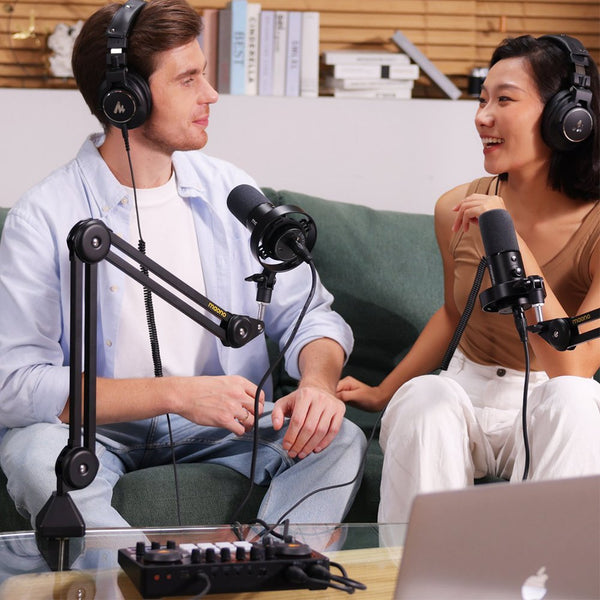
PD500W is the better choice for video podcasters, two-person interview hosts, mobile creators, camera shooters, and anyone who switches between phone, camera, computer, and audio interface workflows.
Mobile and video work create more points of failure. A camera input can be set wrong, a cable can be too short, a phone adapter can fail, or a computer may not recognize the mic before recording. When the session involves a guest or a one-time moment, those small problems can cost the whole take.
PD500W addresses this with XLR, USB, 2.4GHz wireless, and internal recording. Standalone internal recording lets creators save audio without a computer, audio interface, or external recorder. Its 32-bit float internal recording, safety channel, dual-channel recording, and timecode support are especially useful for interviews, camera shoots, and content that should not need a second take.
The mic also fits two-person and video workflows through its dual-transmitter, single-receiver system, mobile receiver, and camera receiver. A 60-hour battery life helps on long recording days. For audio quality, PD500W uses a 30mm dynamic capsule, cardioid pattern, 48 kHz / 24-bit recording, and supports up to 147 dB SPL over XLR and 128 dB SPL over USB.
PD500W is not valuable because it has more features on paper. It is valuable when those features mean fewer cables, fewer devices to check, and less risk of losing a take. To understand why Maono built PD500W around easier setup, safer recording, and faster post-production, read the story behind the PD500W hybrid AI podcasting microphone.
Who should choose the Maono PD500X USB/XLR dynamic microphone?
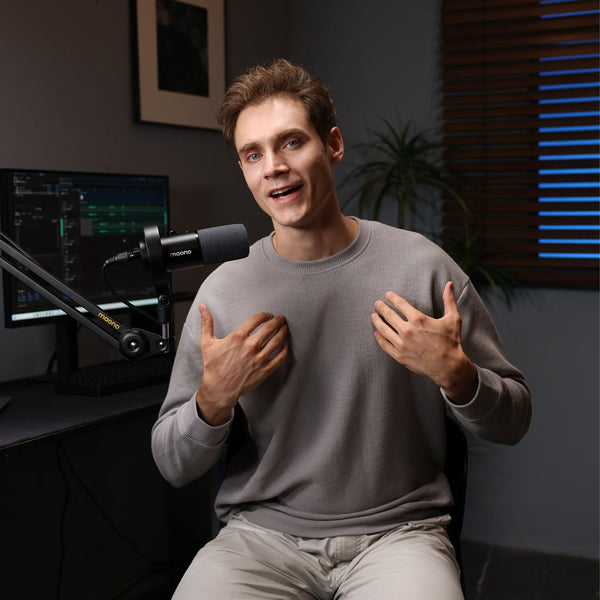
PD500X is the better choice if your recording life happens mostly at a desk: desktop podcasting, livestreaming, voiceover, vocal recording, home studios, and DAW-based production.
For many creators, the hard part of using a dynamic microphone is the chain around it. A traditional XLR mic may need an audio interface, clean gain, monitoring, software control, and sometimes an inline preamp. That is a lot for a new podcaster or streamer who simply wants a strong voice without filling the desk with extra gear.
PD500X is built to simplify that chain. It supports USB-C and XLR, includes a built-in 20/30 dB preamp, and can record over USB without an audio interface. Beginners can start with a direct computer setup, while advanced users can still move into XLR, DAW, and interface workflows later.
PD500X also has a strong desktop production feature set: 192 kHz / 24-bit capture, ASIO driver support, reverb effects, AI noise reduction, AGC, EQ, compressor, limiter, de-popper, Maonolink control, and AI transcription, summaries, and translation. Like PD500W, it uses a 30mm dynamic capsule, cardioid pattern, and supports up to 147 dB SPL over XLR and 128 dB SPL over USB.
If your main problem is getting a cleaner desktop voice with less external gear, PD500X is the more focused tool.
Scenario-by-scenario recommendation
For video podcasting, choose PD500W. Video adds camera distance, visible cable issues, room layout changes, and backup audio concerns. A hybrid microphone with wireless and internal recording fits that job better.
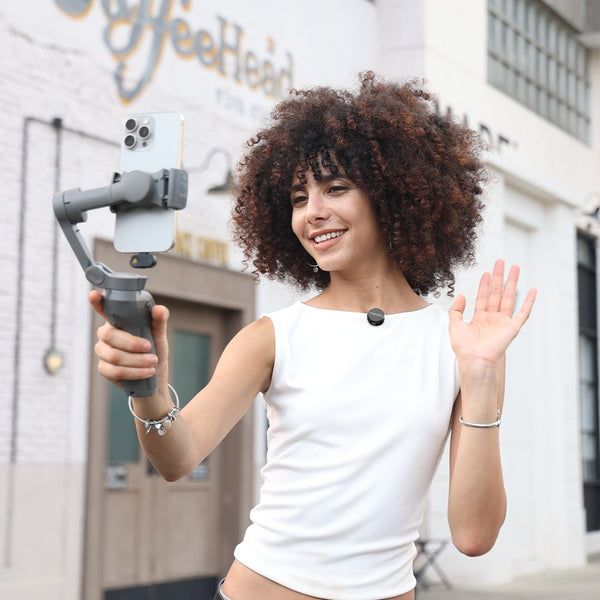
For mobile interviews, choose PD500W. Internal recording, wireless use, safety channel, and camera workflow support matter more than a desk-first signal chain when you cannot risk losing the take.
For two-person interviews, choose PD500W. Its wireless system, dual-channel recording, and receiver options are made for conversation setups outside a fixed desk.
For fixed desktop livestreaming, choose PD500X. Streamers usually need stable USB or XLR audio, easy gain, monitoring, and a predictable desk setup. PD500W makes more sense if the same creator also films camera-based or mobile content.
For DAW recording, choose PD500X. ASIO support, USB/XLR flexibility, built-in preamp, and high-resolution desktop recording make it the better fit for computer-based production.
For beginners, start with the workflow. If you only record at a desk, PD500X is more direct. If you want one mic for desk, phone, camera, mobile interviews, and internal backup, PD500W is more flexible.
Gear chain and total cost
The real cost of a microphone is the full chain around it: interface, recorder, adapters, gain booster, cables, batteries, mounts, software, and the time spent checking everything before recording.
PD500W can reduce the need for a separate recorder in mobile and camera workflows because it has internal recording. It can also reduce setup changes when creators move between phone, camera, computer, and interface recording.
PD500X reduces cost in a different way. It can record over USB without an audio interface, and its built-in preamp can reduce the need for a Cloudlifter-style booster.
If you would otherwise need a recorder, wireless setup, and camera backup, PD500W may solve more problems. If you would otherwise need a preamp, interface, or gain booster for a desk setup, PD500X may be the cleaner purchase.
FAQ
Ⅰ. What is a hybrid microphone?
A Hybrid Microphone is a plug-andplay mic that combines wireless freedom(2.4GHz) with wired-level professionalism(USB/XLR), so creators can focus on creating-not setting up.
Ⅱ. Is PD500W a hybrid microphone?
Yes. PD500W is a hybrid dynamic microphone for creators who need more than a fixed USB or XLR setup. Its value is the mix of dynamic voice capture, wireless use, internal recording, and cross-device compatibility.
Ⅲ. Who is PD500W for?
PD500W is for video podcasters, interview creators, mobile creators, camera shooters, and users who need internal recording without a computer, audio interface, or recorder.
Ⅳ. Who is PD500X for?
PD500X is for desktop podcasters, livestreamers, voiceover creators, vocal users, home studios, and DAW users who want USB/XLR recording, a built-in preamp, and a simpler desktop chain.
Ⅴ. Do I need an audio interface?
With PD500X, you can record over USB without an audio interface, then use XLR later if you want a traditional studio setup. PD500W is more about flexible device workflows and internal recording when you are not always at a computer.
Ⅵ. Do I need a Cloudlifter?
PD500X includes a built-in 20/30 dB preamp, so many users can avoid adding a Cloudlifter-style booster. PD500W does not focus on built-in preamp gain; its value is hybrid connectivity, wireless recording, and internal backup.
Ⅶ. Is PD500W worth it if I only record at a desk?
If you only record at a desk and do not need wireless, camera workflows, or internal recording, PD500W may be more than you need. PD500X is usually the better fit for fixed podcasting, livestreaming, voiceover, and DAW recording.
Final recommendation
Choose PD500W if your content moves beyond the desk. It is the better match for creators who need a hybrid microphone for video podcasts, mobile interviews, camera shoots, wireless recording, split tracks, timecode, and standalone internal recording.
Choose PD500X if your recording chain stays mostly at the desk. It is the better match for creators who want a USB/XLR dynamic microphone with a built-in preamp, no required Cloudlifter, optional no-interface USB recording, ASIO support, and desktop AI DSP.
Both microphones are now available on Kickstarter. The PD500X early bird price starts at $319, while the PD500W super early bird price starts at $349. Check the campaign page for current pledge options, bundles, shipping details, and launch availability before choosing your kit.