


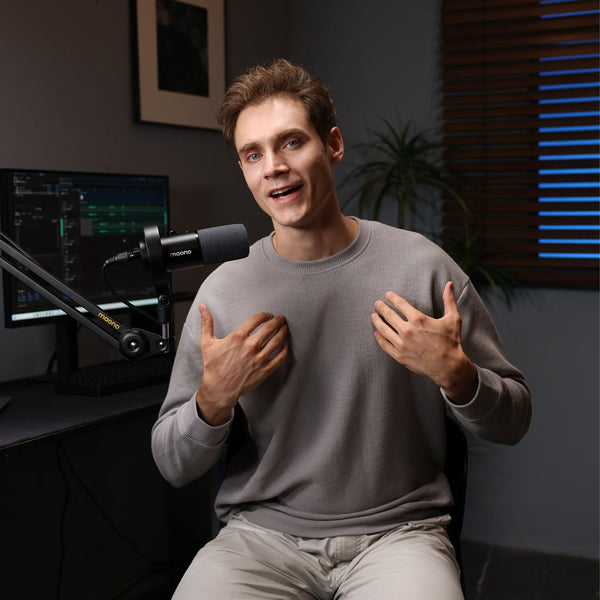

Cardioid microphones are a go-to choice for singers and vocalists looking to elevate their recording quality. Whether you’re building a home studio cardioid mic setup or performing live, these microphones are widely trusted as a reliable vocal recording microphone option. But what exactly is a cardioid microphone, and why are they so highly recommended for vocals?
Cardioid mic definition:
A cardioid mic or cardioid microphone is a type of directional microphone for vocals with a heart-shaped pickup pattern. The term “cardioid” comes from the Greek word kardia, meaning heart, and refers to how these microphones capture sound primarily from the front while reducing noise from the sides and rear. This cardioid polar pattern makes it ideal for vocal recordings and live performance situations where clarity and isolation matter most.
In this article, we’ll explore which microphones use cardioid patterns, why these cardioid pattern microphones are considered some of the best cardioid condenser mic options for singing, and answer common questions to help vocalists choose the right mic for their needs.
How a Cardioid Mic Works
A cardioid mic gets its name from the heart-shaped polar pattern it produces. In a cardioid polar pattern, the microphone is most sensitive to sound coming from directly in front while gradually rejecting sound from the sides and nearly all sound from the rear.
This heart-shaped pickup helps focus on the singer’s voice and reduce unwanted background noise like room reflections, air conditioning, or audience sound. For vocal recording, this means cleaner tracks, better vocal presence, and a more intimate, professional sound—especially important when using a home studio cardioid mic in an untreated space.
What Types of Mics Use Cardioid Microphone Patterns?
What types of mics use cardioid microphone mics? Cardioid polar patterns are found in several types of microphones, including:
-
Dynamic Microphones
Dynamic cardioid microphones are popular for live vocals due to their durability and strong feedback rejection. Their directional design makes them a dependable directional microphone for vocals on stage.
Example: Shure SM58
-
Condenser Microphones
Known for their sensitivity and detailed sound reproduction, Cardioid condenser microphones with cardioid patterns are widely used in studio settings. They excel at capturing the nuances of a singer’s voice, making them ideal for recording vocals and acoustic instruments.
Example: Audio-Technica AT2020
-
USB Microphones
USB mics with cardioid patterns are perfect for beginners and content creators looking for an easy-to-use vocal recording microphone for home setups.
Example: Maono PM422
-
Ribbon Microphones
Although less common, some ribbon microphones feature cardioid patterns, delivering warm and vintage tones for studio recordings.
Tailoring the cardioid pattern to these different mic types allows manufacturers to offer solutions to consumers for various vocal recording scenarios, from studio sessions to live gigs. These are all mics that use the cardioid pickup pattern effectively.
What Are Cardioid Mics Best For?
Cardioid microphones shine in situations where focus and sound isolation are crucial. Their directional nature reduces ambient noise and feedback, making them perfect for:
-
Studio Vocal Recording
Capturing clear and isolated vocals without interference from room acoustics or other instruments.
-
Live Performances
Preventing feedback from stage monitors and ensuring the singer’s voice is projected clearly.
-
Podcasts and Voiceovers
Providing crisp and professional sound quality for spoken word applications.
-
Home Studios
Managing imperfect acoustic environments by reducing background noise.
In essence, cardioid microphones are highly versatile and effective for any situation where precision and clarity are necessary. This versatility makes cardioid microphones a top choice as a vocal recording microphone across many use cases.
Is the Cardioid Microphone Good for Vocals?
Focuses on the singer’s voice using a cardioid polar pattern
-
Focused Sound Pickup
The cardioid pattern captures sound directly in front of the microphone while rejecting unwanted noise from the sides and rear. This ensures that the singer’s voice is clear and prominent in the recording.
-
Feedback Prevention
In live settings, cardioid microphones help reduce feedback from speakers or monitors, making them a reliable choice for vocalists on stage.
-
Enhanced Clarity
Cardioid microphones emphasize the midrange frequencies, which are crucial for vocals, ensuring the voice cuts through the mix.
-
Versatility
Whether you’re recording soft ballads, powerful rock vocals, or spoken word performances, cardioid microphones adapt to various vocal styles and genres.
Practical Tips for Using a Cardioid Mic
To get the best sound from a cardioid mic, especially for vocal recording, proper setup and technique make a big difference. Here are some simple, effective tips:
Mic Distance and Placement
Keep your cardioid mic about 6–12 inches away from your mouth. This distance helps capture clear vocals while reducing plosives (hard “p” and “b” sounds) and minimizing breath noise. If you’re too close, the sound can become boomy; too far, and you’ll pick up more room noise.
Use a Pop Filter
Attach a pop filter between your mouth and the mic to block plosive bursts. A pop filter smooths out airflow, resulting in cleaner, more professional vocals without harsh consonant hits.
Add a Shock Mount
A shock mount isolates the mic from desk vibrations or stand movements. This prevents thumps and low-frequency rumble from being captured, especially useful if you’re recording in a home or improvised studio.
Mic Positioning for Vocals
Angle the mic slightly off-axis (about 10–20°) rather than directly in front of your mouth. This reduces plosives further while still letting the cardioid pattern focus on your voice. For singers, tilting the mic toward the lower lip (but not directly at the mouth) often delivers a warm, natural tone.
Control Room Noise
Aim the back and sides of the cardioid mic toward noise sources—like fans, open windows, or monitors. The cardioid pattern rejects sound from the rear, so thoughtful placement minimizes unwanted background sound.
By fine-tuning distance, adding accessories like pop filters and shock mounts, and positioning the mic thoughtfully, you’ll get clearer, fuller vocals that highlight the strengths of a cardioid mic and elevate your recordings.
Also Read: Street Vocal Collabs: Master Cardioid Mic Setup & Sound Tips
What to Look for in a Cardioid Mic
Choosing the right cardioid mic makes a big difference in vocal quality, clarity, and overall performance. When shopping for a cardioid microphone, consider these key factors:
Frequency Response
A smooth and balanced frequency response ensures vocals sound natural, warm, and detailed—essential for any best cardioid condenser mic used in singing or voice recording. Look for a mic that captures both smooth low end and clear high frequencies so your singing comes
Noise Rejection
One of the main advantages of a cardioid pattern is its ability to reject off-axis noise—sound from the sides and back. A good cardioid mic should minimize room reflections and background noise, especially helpful for home studios or untreated recording spaces. Strong off-axis noise rejection is critical, especially for a home studio cardioid mic, where background noise and reflections are common.
Price Range
Cardioid mics come in a range of prices:
-
Budget: Affordable options for beginners or home use
-
Mid-tier: Better build quality and vocal clarity for content creators and semi-pro singers
-
Professional: Premium sound and durability for studio and live work
Choose a mic that fits your goals without overpaying for features you don’t need yet.
Best Scenarios (Studio vs. Live)
-
Studio Recording: Cardioid condenser mics are ideal for capturing detailed vocals in controlled environments.
-
Live Performance: Dynamic cardioid mics handle loud sound pressure levels and reduce feedback, making them excellent for stage use.
By focusing on frequency response, noise rejection, appropriate pricing, and matching your mic to your recording situation, you’ll find a cardioid mic that elevates your vocal recordings with clarity, presence, and professional quality.
Frequently Asked Questions:
What Makes a Cardioid Microphone Different from Other Types of Microphones?
The defining characteristic of a cardioid microphone is its directional pickup pattern. Unlike omnidirectional microphones, which capture sound equally from all directions, or bidirectional microphones, which capture sound from the front and back, cardioid microphones focus on sound coming from a specific direction (the front). This directional capability makes them ideal for isolating a single sound source, such as a singer’s voice, while minimizing ambient noise.
Polar Pattern Comparison: Cardioid vs. Omnidirectional vs. Bidirectional
|
Mic Type |
Polar Pattern |
Best For |
|
Cardioid Mic |
Heart-shaped pattern that captures sound mainly from the front and rejects sound from the sides/rear |
Vocal recording, live vocals, podcasting, home studio |
|
Omnidirectional Mic |
Picks up sound equally from all directions |
Room ambience, group vocals, acoustic instruments |
|
Bidirectional Mic |
Figure-8 pattern that captures sound from the front and back, rejects from sides |
Duet vocals, interviews with two speakers facing each other |
Benefits of Using a Cardioid Mic
-
Focused Sound Capture – Emphasizes the vocalist’s voice while minimizing background noise.
-
Reduced Room Reflections – Rejects off-axis sound, making it ideal for untreated rooms.
-
Clearer Vocal Presence – Produces intimate, natural-sounding recordings that highlight vocal detail.
-
Versatile for Live and Studio – Works well in both live performance and studio/home studio settings.
-
Improved Noise Isolation – Minimizes bleed from other sound sources, which is helpful for solo vocal tracking.
How Does the Cardioid Pattern Affect Sound Capture in Vocal Recording?
The cardioid pattern significantly impacts sound capture in the following ways:
-
Reduces Background Noise: By rejecting sounds from the rear and sides, cardioid microphones minimize background noise, ensuring the vocals are clean and isolated.
-
Improves Recording Quality: The focused pickup pattern helps reduce room reflections and unwanted reverberations, especially in less-than-perfect acoustic environments.
-
Emphasizes Vocal Details: With a natural boost in midrange frequencies, cardioid microphones enhance vocal clarity and warmth, making the singer’s performance stand out.
What Maono Cardioid Microphones Are Best for Home Studios?
Maono offers a range of affordable and high-quality cardioid microphones perfect for home studio setups. Here are some top picks:
-
Maono A04
The Maono AU A04 or simply, Maono A04 is a budget-friendly condenser microphone with a cardioid pickup pattern, ideal for beginners. It offers clear sound quality and includes a complete starter kit with a pop filter and shock mount.
-
Maono PM422

The Maono PM422 is a USB condenser microphone featuring a cardioid pattern, this mic provides excellent sound isolation and comes with touch-sensitive mute and gain control, making it perfect for recording vocals and streaming.
-
Maono PM320

This professional-grade condenser microphone known as Maono PM320, delivers exceptional clarity and a wide frequency response. Its cardioid pattern ensures precise vocal capture, making it suitable for advanced home studio setups.
Each of these microphones offers excellent value for money, catering to singers of all skill levels.
4. Maono PM450

The Maono PM450 USB Condenser Microphone is a versatile cardioid mic designed for clear, focused vocal recording with a wide 20 Hz–20 kHz frequency response and USB/USB-C plug-and-play connectivity. Its cardioid polar pattern helps reject unwanted background noise, while features like real-time monitoring, adjustable gain control, and an integrated pop filter ensure professional-sounding vocals in home studio and streaming setups. With a rugged build and intuitive controls, the PM450 makes capturing rich, natural vocals simple for singers, podcasters, and content creators alike.
Other Top Options for Cardioid Pattern Microphones Great For Singing or Vocal Recordings:
-
Shure SM7B: A dynamic cardioid microphone known for its warm, rich sound and built-in pop filter, the SM7B excels at reducing background noise while capturing vocal nuances. It’s perfect for singers seeking studio-quality recordings with exceptional clarity and low self-noise.
-
AKG C214: A condenser cardioid microphone with a wide dynamic range and high SPL handling, the C214 captures detailed and natural vocal tones. Its shock-mounted capsule and bass-cut filter make it ideal for singers recording in diverse acoustic environments.
What is the best cardioid mic for home vocal recording?
The best cardioid mic for home vocal recording depends on your budget and setup, but generally a cardioid condenser microphone with a warm frequency response and low self-noise performs exceptionally well for vocals. These mics capture clear, focused sound while minimizing background noise, making them ideal for solo singing in untreated rooms. Look for options with a smooth midrange and wide dynamic range to ensure rich, detailed vocal recordings at home.
How does a cardioid mic compare to a condenser mic for singing?
A cardioid mic refers to the pickup pattern, while a condenser mic refers to the mic’s design and transducer type. Many vocal recording mics are cardioid condenser mics, combining the directional focus of a cardioid pattern with the sensitivity and detail of a condenser capsule. Compared to non-cardioid patterns, a cardioid mic reduces unwanted room noise. Compared to dynamic mics, cardioid condenser mics capture more detail and clarity, making them especially suited for singing and studio vocal work.
Conclusion
Cardioid microphones remain one of the smartest investments for singers who value clarity, control, and versatility. With their focused cardioid polar pattern, they reduce unwanted noise while delivering clean, expressive vocals in both studio and live settings. Whether you’re choosing a home studio cardioid mic or a professional vocal recording microphone, cardioid mics continue to set the standard for vocal performance and recording quality.
Whether you’re a beginner setting up a home studio or a seasoned vocalist performing on stage, investing in a good cardioid microphone can make a significant difference in your sound quality. With options like the Maono PM320 or PM422 or the PM450, achieving excellent vocal recordings has never been more accessible.
Embrace the precision and clarity of cardioid pattern microphones, and take your vocal recordings to the next level.